Load assessment
We list the loads to be backed up, their running wattage, surge behaviour and required backup hours.
Off-Grid Solar
An off-grid solar system stores generated energy in batteries so selected loads keep running without the grid. It suits locations with unreliable or unavailable supply, and costs more per kW than an on-grid system because of the battery and charge control.
An off-grid solar system stores generated energy in batteries so selected loads keep running without the grid. It suits locations with unreliable or unavailable supply, and costs more per kW than an on-grid system because of the battery and charge control.
Off-grid design starts from the loads you must keep running and for how long, not from roof area. Daily energy requirement, backup duration and surge loads determine battery capacity; the array is then sized to recharge that bank reliably, including on cloudy days.
GLS designs off-grid and hybrid systems with proper charge control, protected battery placement and clear separation of backed-up and non-backed-up circuits.
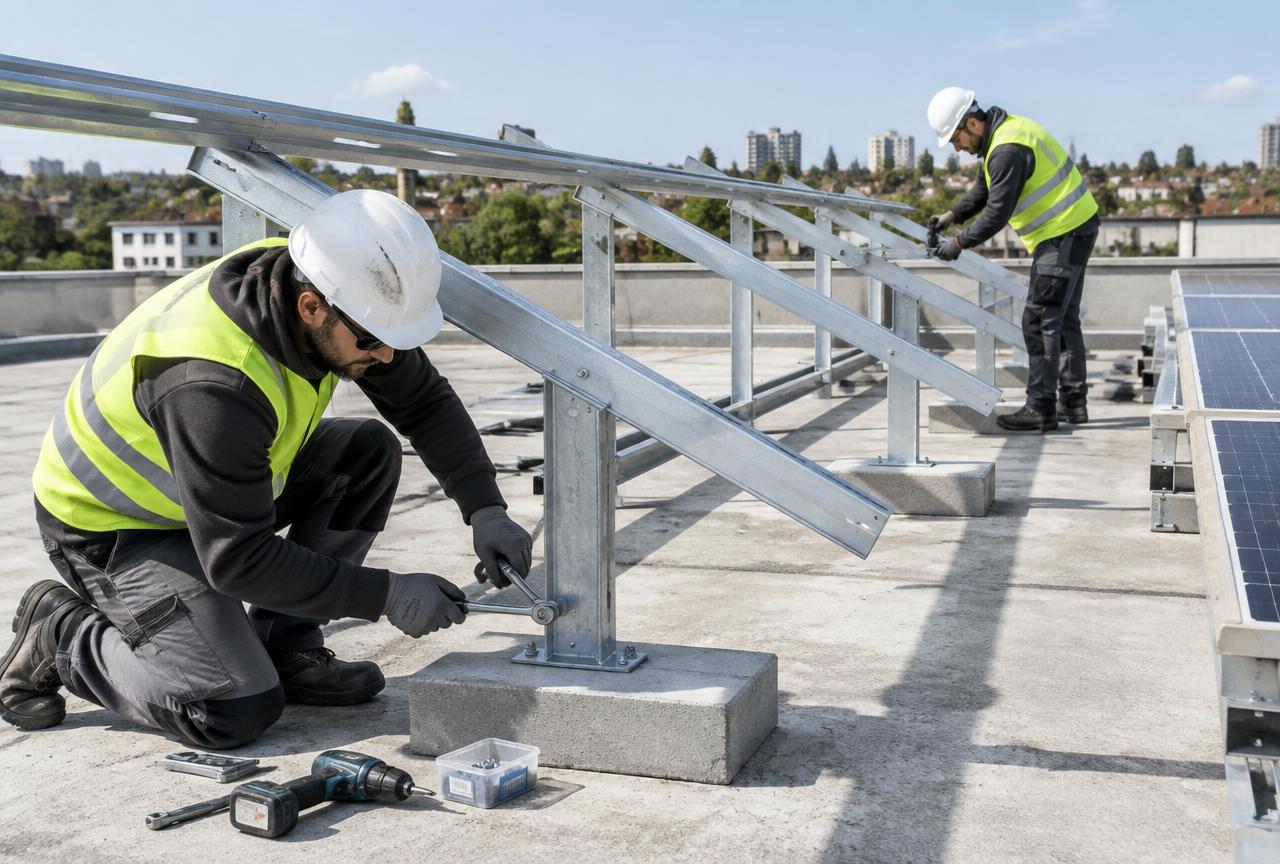
We list the loads to be backed up, their running wattage, surge behaviour and required backup hours.
Battery capacity is derived from daily energy use, depth of discharge and autonomy days.
A hybrid inverter or MPPT charge controller manages array, battery and load priorities.
Backed-up circuits are segregated so high loads do not drain the bank unexpectedly.
We understand your load profile, electricity bill, tariff category and objective.
Roof or land survey covering area, orientation, shadow, structure and electrical infrastructure.
Capacity sizing, layout, module and inverter selection, cable and protection design.
Detailed scope, bill of materials, indicative generation and commercial proposal.
Structure fabrication and erection, module mounting, DC and AC works, earthing and protection.
Insulation, polarity, string current, earthing and inverter commissioning checks.
Coordination for net-metering or grid approval where applicable, then documented handover.
Generation review, scheduled cleaning and inspection, and corrective maintenance.
Batteries store solar energy so selected loads can run when there is no generation or no grid.
The inverter converts DC from the array into usable AC power and controls how the system interacts with the grid and batteries.
Photovoltaic modules that convert sunlight into DC electricity — the generating element of every solar system.
GLS has completed 300+ projects across Tamil Nadu. Case studies in this category are being documented with client approval, and we publish only what owners have confirmed may be shared. Ask us for references relevant to your category and we will send what has been approved for disclosure.
Projects & Case StudiesBackup duration is a design input. It depends on battery capacity, usable depth of discharge and the actual load connected — so it is defined during sizing and stated in the proposal.
Where a grid connection exists, hybrid is usually the practical choice: solar self-consumption and battery backup, with the grid available as support instead of a larger, costlier battery bank.
A short conversation about your consumption and site is usually enough for us to tell you what is worth doing.