
Product category
Solar Inverters
The inverter converts DC from the array into usable AC power and controls how the system interacts with the grid and batteries.
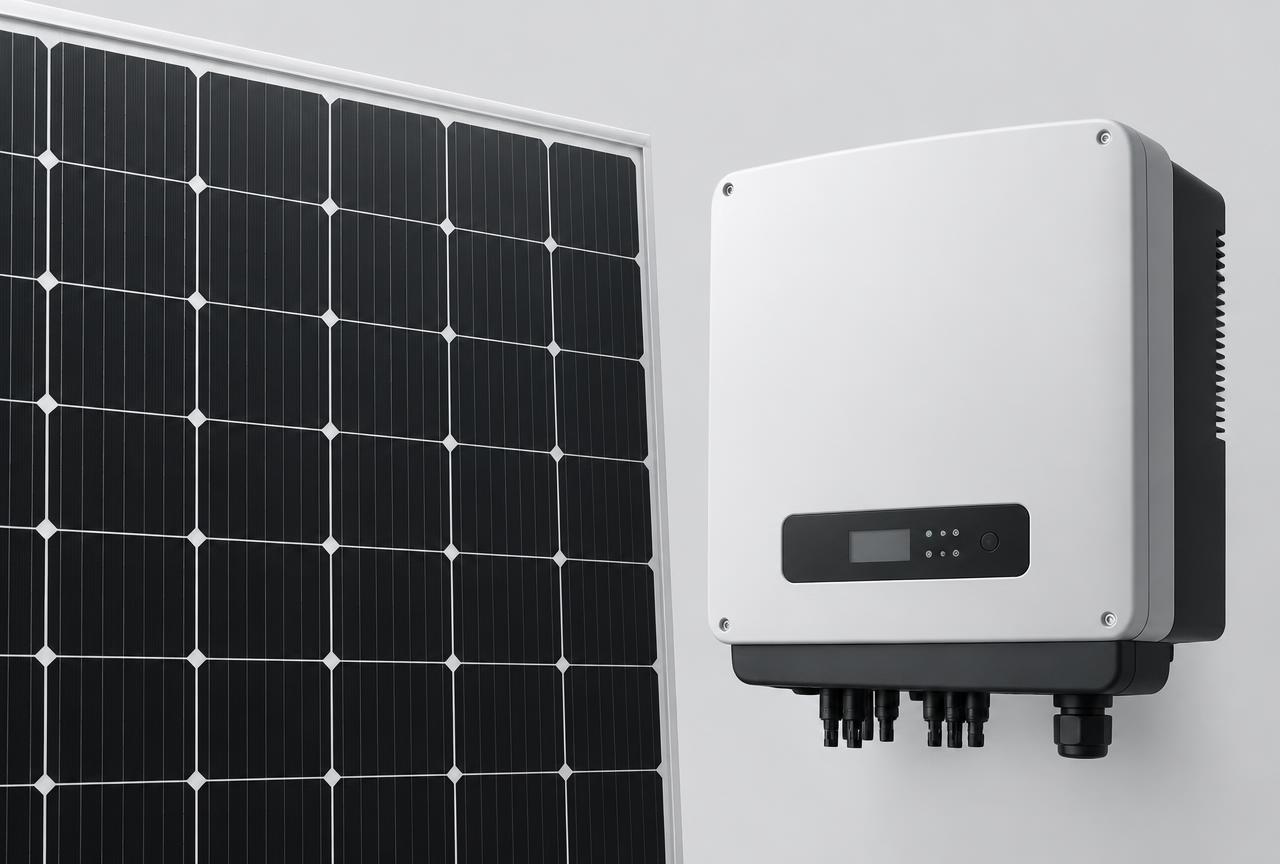
What it is
A solar inverter performs maximum power point tracking on the array, converts DC to AC at your supply voltage and frequency, and enforces protection functions such as anti-islanding, insulation monitoring and fault disconnection. It is also the system's main monitoring point.
Where it is used
- Grid-tied rooftop and ground-mount systems (string inverters)
- Battery-backed and backup systems (hybrid inverters)
- Standalone systems without grid (off-grid inverters)
- Large plants using central or multi-MPPT string inverters
Key specifications
- Types
- String (on-grid), hybrid (solar + battery), off-grid, central
- Phase
- Single-phase for small systems; three-phase for larger and commercial sites
- MPPT
- Multiple trackers used where roof orientation or shading varies
- Protection
- Anti-islanding, DC/AC surge, insulation monitoring, over/under voltage and frequency
- Monitoring
- Wi-Fi, LAN or GPRS data logging with portal or app access, per model
Specifications and warranty
- Capacity, efficiency, MPPT range, protection class and warranty are per the manufacturer datasheet for the model quoted.
- Inverter capacity is matched to array size and site supply conditions, including a DC:AC ratio appropriate to the location.
Where this fits in our services
On-Grid Solar
An on-grid solar system works in parallel with the utility grid and has no batteries. It is the lowest-cost configuration per kW and is suited to sites with reasonably reliable grid supply that want to reduce their electricity bill.
Off-Grid Solar
An off-grid solar system stores generated energy in batteries so selected loads keep running without the grid. It suits locations with unreliable or unavailable supply, and costs more per kW than an on-grid system because of the battery and charge control.
Solar O&M / Maintenance
Solar O&M keeps an installed plant generating close to its design output through scheduled cleaning, electrical inspection, performance review and prompt fault rectification. GLS provides O&M for its own installations and for systems built by others.
Need help choosing the right components?
We match components to your design, site conditions and serviceability needs — not to a stock list.